
Your hours are wrong somewhere right now
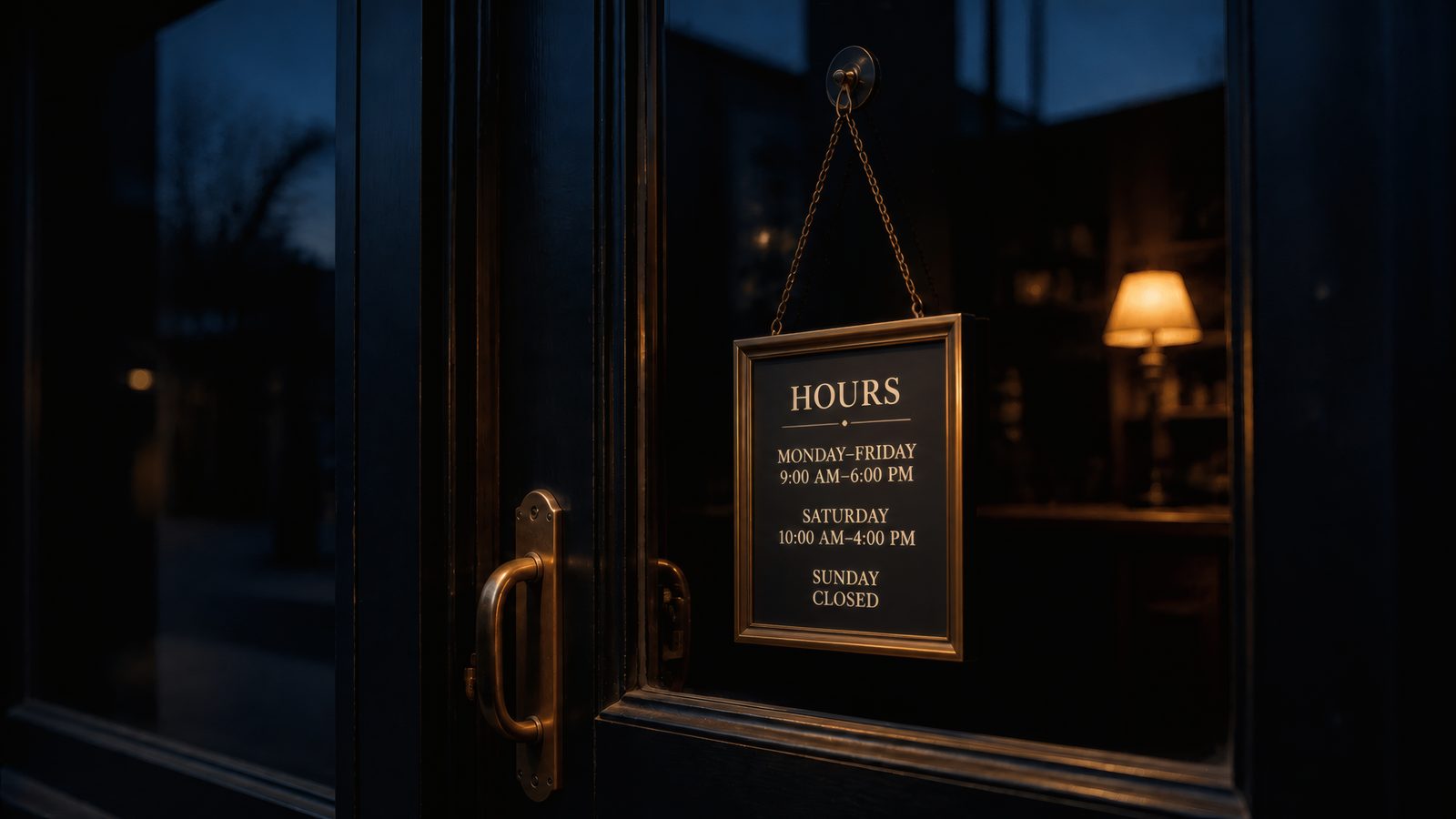
Somewhere online, right now, your business hours are wrong. They live in half a dozen places, and every copy was set up on a different day by a different version of you.
We see it weekly, checking real businesses: the website says one thing, Facebook another, and a platform nobody remembers configuring casts the deciding vote. Here is where the copies hide, what the drift quietly costs, and the fifteen-minute audit that ends it.
Your hours live in more places than you think
Count them: your Google Business Profile, your website footer, your Facebook page, Yelp, Apple Maps, and whatever ordering or booking platform you use. Six copies minimum, each editable in a different dashboard, each looking equally official to a customer.
And the readers have multiplied. Voice assistants and AI search answers pull hours from these same surfaces, so a wrong entry does not just sit there, it gets read out loud as fact.
A customer at a locked door blames you
Someone who drives over at 6:15 because one of your pages said 7:00 does not file the experience under “data inconsistency.” They file it under “this place wasted my trip,” and the review that follows says closed early, which is worse than the truth.
The cruelest part is that you did nothing wrong tonight. The wrong number was published months ago, by whoever set up a page you have not opened since.
Google notices the disagreement
Local search runs on confidence. When the major surfaces agree about your name, address, phone and hours, Google can present your business without hedging. When they disagree, you will see it hedge, the profile grows a “hours might differ” flag and the certainty drains out of your listing.
Consistency across the big surfaces is one of the oldest, cheapest local search signals there is, and it is entirely under your control.
Holidays are where hours go to die
The classic mistake is editing your regular hours for one holiday and forgetting to change them back. Now every Tuesday says you close at 3 because of one Christmas Eve.
Google Business Profile has special hours for exactly this: the exception applies to the date and expires on its own, and your regular week never moves.
Seasonal closings have a right way
If your business closes for the winter, the one thing never to press is permanently closed. That label tells Google you are gone, tells customers you failed, and drains the standing your listing spent years earning.
The right way is boring: mark the closed months with special or seasonal hours, put the reopen date somewhere visible, and leave the profile alive.
Pick one source of truth
Hours drift because six copies means six chances to be right, and nobody owns the master. Pick one, for most businesses the Google profile, and make a rule: hours change there first, and every other surface copies it the same day.
This week we checked a family farm store before sending them a note. Their own Facebook said the store closes at 6. Their ordering site said 7. Yelp sided with Facebook. Three of their own pages, two answers, all official-looking. That is what happens to careful people without a master copy.
The fifteen-minute audit
Search your business name. Open your Google profile, your website, Facebook, Yelp, Apple Maps, and your ordering or booking page. Compare every one against your master copy, and fix what disagrees, to the minute.
Then put two reminders on the calendar: quarterly, and the week before each holiday. That is the entire system. Fifteen minutes, four times a year, and no customer of yours stands at a locked door holding a phone that swears you are open.
Find out what else disagrees about you
Run a free, instant scan of your online presence and see what is quietly costing you calls. Real results, no email, no signup.
Run a free scanWant the full picture across your website, Google profile, reviews and local search, each with the exact fix? That's what a BellCode audit is for.